Saturday, September 26, 2015

MORE BLACK AMERICAN INVENTORS

Born: December 23, 1867 
Delta, Louisiana 
Died: May 25, 1919 
New York, New York 

African American businesswoman
As a manufacturer of hair care products for African American women, Madame C. J. Walker, born Sarah Breedlove, became one of the first American women millionaires.

Struggling childhood

Madame C. J. Walker, named Sarah Breedlove at birth, was born December 23, 1867, in Delta, Louisiana, to Owen and Minerva Breedlove, both of whom were emancipated (freed) slaves and worked on a cotton plantation. At the age of six Sarah's parents died after the area was struck by yellow fever, a deadly disease oftentimes spread by mosquitoes. The young girl then moved to Vicksburg to live with her sister Louvinia and to work as a housemaid. She worked hard from the time she was very young, was extremely poor, and had little opportunity to get an education. In order to escape the terrible environment created by Louvinia's husband, Sarah married Moses McWilliams when she was only fourteen years old. At eighteen she gave birth to a daughter she named Lelia. Two years later her husband died.
Sarah then decided to move to St. Louis, Missouri, where she worked as a laundress (a woman who washes people's clothes as a job) and in other domestic positions for eighteen years. She joined St. Paul's African Methodist Episcopal Church and put her daughter through the public schools and Knoxville College. Sarah, who was barely literate (able to read and write), was especially proud of her daughter's educational accomplishments.

Develops hair care products

By the time Sarah was in her late thirties, she was dealing with hair loss because of a combination of stress and damaging hair care products. After experimenting with various methods, she developed a formula of her own that caused her hair to grow again quickly. She often said that after praying about her hair, she was given the formula in a dream. When friends and family members noticed how Sarah's hair grew back, they began to ask her to duplicate her product for them. She began to prepare her formula at home, selling it to friends and family and also selling it door to door.
Sarah began to advertise a growing number of hair care products with the help of her family and her second husband, Charles Joseph Walker, a newspaperman whom she had married in 1906 after she moved to Denver, Colorado. She also adopted her husband's initials and surname as her professional name,
Madame C. J. Walker. Reproduced by permission of the Granger Collection.
Madame C. J. Walker. 
Reproduced by permission of the
Granger Collection
.
calling herself Madame C. J. Walker for the rest of her life, even after the marriage ended. Her husband helped her develop mail marketing techniques for her products, usually through the African American-owned newspapers. When their small business was successful, with earnings of about ten dollars a day, Walker thought she should continue to expand, but her husband thought otherwise. Rather than allow her husband's wishes to slow her work, the couple separated.

Business booms

Walker's business continued to expand. She not only marketed her hair care products but also tutored African American men and women in their use, recruiting a group called "Walker Agents." Her products were often used with a metal comb that was heated on the stove, then applied to straighten very curly hair. She also began to manufacture a facial skin cream. The hair process was controversial (open to dispute) because many felt that African American women should wear their hair in natural styles rather than attempt to change the texture from curly to straight. In spite of critics, Walker's hair care methods gained increasing popularity among African American women, who enjoyed products designed especially for them. This resulted in growing profits for Walker's business and an increasing number of agents who marketed the products for her door to door.
Walker worked closely with her daughter Lelia and opened a school for "hair culturists" in Pittsburgh, Pennsylvania,—Lelia College—which operated from 1908 to 1910. In 1910 the Walkers moved to Indianapolis, Indiana, where they established a modern factory to produce their products. They also began to hire African American professionals who could direct various aspects of their operation. Among the workers were tutors who helped Walker get a basic education.
Walker traveled throughout the nation demonstrating her products, recruiting salespersons, and encouraging African American entrepreneurs (business investors). Her rounds included conventions of African American organizations, churches, and civic groups. Not content with her domestic achievements, Walker traveled to the Caribbean and Latin America to promote her business and to recruit individuals to teach her hair care methods. Observers estimated that Walker's company had about three thousand agents for whom Walker held annual conventions where they were tutored in product use, hygienic (cleaning) care techniques, and marketing strategies. She also gave cash awards to those who were most successful in promoting sales.
At Lelia's urging, Walker purchased property in New York City in 1913, with the belief that a base in that city would be important. In 1916 she moved to a luxurious town-house she had built in Harlem, and a year later to an estate called Villa Lewaro she had constructed at Irvington-on-Hudson, New York.

Charity and legacy

Although Walker and her daughter lived well, they carefully managed each aspect of their business, whose headquarters remained in Indianapolis, and gave to a number of philanthropic (charity) organizations. According to rumor, Walker's first husband was lynched (killed by a group of people acting outside of the law). Perhaps it was partially for this reason that Walker supported antilynching legislation (laws) and gave generously to the National Association for the Advancement of Colored People (NAACP), eventually willing that organization her estate in Irvington-on-Hudson. The Walkers generously supported religious, educational, charitable, and civil rights organizations.
Walker did not listen to her doctors' warnings that her fast-paced life was hurting her health. On May 25, 1919, when she was fifty-one years old, she died of hypertension (high blood pressure). Her funeral service was held in Mother Zion African Methodist Episcopal Zion Church in New York City. Celebrated African American educator Mary McLeod Bethune (1875–1955) delivered the eulogy (a tribute), and Walker was buried at Woodlawn Cemetery in the Bronx. Her daughter, Lelia, took over her role as president of the Madame C. J. Walker Manufacturing Company.


Read more: http://www.notablebiographies.com/Tu-We/Walker-Madame-C-J.html#ixzz3mr2I3rcw

http://www.notablebiographies.com/Tu-We/Walker-Madame-C-J.html

Friday, September 25, 2015

Michael Jackson- Bad [HD 1080p]

Michael Jackson - Smooth Criminal ~ Moonwalker Version [MFO]

Selena - Baila Esta Cumbia

Selena - Bidi Bidi Bom Bom - Live

Slumdog Millionaire Official Jai Ho Music Video HD youtube original


It is always good to listen to different type of music! Cool!

The Pussycat Dolls feat A.R. Rahman - Jai Ho ( TRUE HD )


Cool video!

Mashallah - Song - Ek Tha Tiger


"Mashallah" or "Mash'Allah" is an Arabic phrase used to show appreciation for a person or happening. It shows respect, and also reminds that everything is achieved by the will of God. The closest English translation is "God willed it." It is used to show joy and praise, and is evoked upon hearing good news. 

Chaiyya Chaiyya (English Subtitles) - Dil Se... HD


I know it is an old song, but I still like it! even when I do not know all they are saying, hahaha!


WHAT’S SO SPECIAL ABOUT BUYING HANDMADE?

spots and stripesImage by Emma Witwiki of Folksy shop Spots and Stripes

Why I Think That Handmade is So Special!

I love handmade, I buy handmade, I make handmade and I sell handmade. Yet often when I am asked why handmade is so special, why each piece costs more than a similar item in the high street shops or why I bother making in the first place, in the face of such hostility I am often stumped as to what to answer. So I decided to do my research, get myself prepared for the next negative comment and be ready to stand up for what I believe in.
So what really is so special about handmade?
Well firstly it is a mistake to compare handmade with the large corporations – there really there is no comparison. We don’t sell it in the same way. We don’t buy it in the same way or even receive it in the same way.  How do you compare a jar of mass produced Jam with a homemade preserve using locally grown fruit presented in a beautiful recycled jar with a cheerful label? It’s impossible!
I would argue that handmade is more sustainable than mass production. Mass production means bulk buying and this forces the lowering of prices down the line, mainly in the production of raw materials. Lower production costs ensure that the large scale companies can make more profit whilst selling, at what first appears to be, a low price – a bargain price.
Dig a bit deeper and what this really means, is that many people worldwide are forced into jobs with little pay and this has a knock on effect those countries, in so far as they cannot develop, cannot sustain their environments and any adverse condition, such as a drought, has a far more adverse impact upon them than if they were wealthier.
The wealthier nations, such as our own, then have to subsidize these poorer countries with loans, rescue aid, charitable giving etc. That money comes from you. It’s a false economy; it’s a profit on a page but not profit in reality because if you had paid the real price in the first place there would be no need to pay up in another way. So when you look at that £1 mug from your local supermarket, it’s not a bargain, it will cost you more in hidden charges than what you initially paid for it.
Mass produced items are perceived as or actually are, ‘throw away’. A horrible culture of, if it’s broken, don’t fix it – just chuck it out, is now so prevalent, that we throw away things that are perfectly fine. We want an upgrade, the latest version, the next best thing…we want to be noticed! However what we are failing to notice is our rubbish piles growing higher and higher!
Here is where handmade excels – there is no need for an upgrade as it is perfect already. There is no need to keep up with the Jones as a handmade object is unique. Even if it is one of a series, each one will be slightly different from the next. It’s the minute imperfections that make it so desirable. Why I hear you ask!
Well, if you own a handmade, unique piece of work then only you in the whole world own it. That’s over 7 billion people who will never get to have it because you have it and if you keep it until 2050 then it will be nearer 10 million people who don’t have it! How’s that for having the edge on everyone else! Each handmade piece of work is as unique as each person in the world.
Mass production is now turning to small crafters for help. They want to try and replicate the handmade feel to an object, but it is a fake, it is not the real McCoy! However they also recognize that people do not want to live in bland, off the shelf environments. Rather than give you the real handmade object, they sell you a machine produced copy. The difference can be likened to that between a diamond and a cubic zirconium! Both are good, but I know which one I would cherish a whole lot more.
Buying handmade supports local craft industries and people, wherever you buy it. The price you pay for it is exactly what you see, there are no hidden costs. The revenue stays within the country and people are not out of work but working in their business either as individuals or groups. Taxes are paid, money is generated and the overall impact on our economy is huge. In the UK, the creative industries account for about 7% of the GDP and each artwork (and I include the handmade mug in this!) contributes to this. Furthermore government investment in the arts sees an amazing return of £2 for every invested £1. Does it make sense to cut this investment? I think not.
Buying handmade ensures that traditional making skills are kept alive and creates a demand for education in these skills. At the moment the powers that be are so busy replacing skills based training in the crafts with less labor intensive or material rich courses, more often than not, offering courses conducted on a computer and easily stored on a pen drive. The outcome of this is potentially lost skills, the demise of handcrafts and a real loss of our cultural identity. Students can be herded through the system quickly, without a huge investment and now can be charged a small fortune for it!
But what happens if the machines can no longer be run, say for example, when our petrol supplies run out. How will we as a nation reinstate these lost skills? The economy is so fragile because we have already lost so many of our skilled industries and we are now playing catch up again. Would it not be better to maintain and increase a skilled artisan base, rather than scramble around at some future date to rediscover it?
Handmade is a celebration of our contemporary lives , a living culture and not part of a mass imposed, one size fits all, consumer culture where everything looks the same and is easily boxed up. Each handmade item is about people and not machines. It is about the time and effort that goes into each piece of work, it is about the skill of each maker, the technical ingenuity of the maker, the magic of an individual’s imagination, and it is a treasure on a beach of throwaway machine made tat!
Call me biased. Say I am a ranting maker on my handmade soap box! But don’t deny the facts; handmade is far better than we have ever given it credit for!
I encourage each and every one of you to buy more handmade this year and every year, not just for the holidays but for all special occasions, or maybe just because you want a new throw pillow!

10 Awesome Reasons to Buy Handmade Gifts This Year

buy handmade
{vases buy huckleberry vintage}
I believe a key part of growing any business in the handmade community is not only about gaining the support of fellow handmade artists, but convincing regular consumers that buying handmade is a smart, viable choice for their hard-earned dollars.
If you search for ‘reasons to buy handmade’ in your favorite search engine, you get a LOT of results.  On one hand, that’s a good thing.  It means people are talking and thinking and posting about why the world should buy more handmade goods.  Being a handmade artist myself, I fully support this.  But I found that many of the reasons were the same, and if I was just a regular consumer (not a member of the handmade community already),
I’m not sure I’d be very convinced that handmade shopping is the easiest way to go.
Yes, I said the easiest way to go.  Certainly handmade is the better way, and I’m not sure many people can argue with that. Look at all the ways it’s better:
1. You support local artisans, and therefore their local economy and community.  Supporting local business has a huge list of benefits all to itself, far too many to list here, but it’s a good thing, trust me.
2. You get high-quality items that are built to last, not all the stuff that has the “How cheap can I produce this?” mentality.  It’ll probably fall apart in a year or two, but handmade items have longevity.  Artisans have pride in their work, and want it to last.  Even the materials are hand-picked by an individual, and what big manufacturing company can say that?
3. Your gifts are the best on the block.  Cool, trendy, unique, and usually one-of-a kind, you can find some really awesome handmade stuff that’ll make everyone ask “Where can I get one?”
4. Customization!  Since each and every item is made by hand, and you are usually talking directly to the person making it, you can tweak the color or size of something you are interested in, or even get a fully commissioned custom order done.  This avoids you having the excuse of “it was all the store had left.”  Want a cool case for your new gadget, but maybe you have some weird size the store doesn’t offer?  Get is custom made to your exact dimensions!  Doggie sweaters from the store never quite fit your beloved pooch?  Customization to the rescue!  The possibilities are endless really.
5. You’re helping the environment.  It’s always a nice feeling to ‘go green’ isn’t it?  Handmade items aren’t made in a waste-producing factory and shipped halfway around the world using fuel and energy.  Buying handmade (especially really locally) can greatly reduce your carbon footprint on the world.
6. You gain a unique connection with an artisan.  You can be in direct contact with the person who made the item with their own hands.  For some reason this is just really cool.  I mean, think about how awesome it’d be to meet your favorite clothing designer, artist, author, or chef.  It’s kinda like that feeling, but on a much smaller and more intimate scale.
7. Let’s not forget the warm fuzzy feeling of knowing you helped support someone very directly.  For example, when you purchase something from my shop, you just helped put food on the table for another meal (and I thank you deeply for that).  You don’t have to pay the shop’s cashier and the various levels of management and the supplier and the designer and the manufacturer, because just one person is all those things!
See, that’s at least 7 really strong reasons why buying handmade is better.   But let’s be honest, when the holiday rush hits, a lot of buyers may not be looking for better as much as they are looking for easy.  The holidays can really sneak up on us, and we all just want to have the gift shopping DONE and the gifts wrapped with plenty of time to bake those cookies and relax a little bit before running to 100 different holiday parties and dinner.   So today I offer you reasons why buying handmade can be the easiest holiday shopping choice you make:
1. Avoid crowded stores.  How annoying is it to maneuver yourself (and your cart, and possibly kids) through packed store aisles only to fight with someone for the last thing on the shelf then wait in a line for hours with a cart full of stuff and realize you still need to get something for your mother-in-law or coworker or neighbor?  Talk about stressful.  Buy handmade items at local craft fairs, markets, and boutiques, or shop online to avoid people altogether.
2. Get it gift wrapped.   This may not apply to all handmade goods, but a large number of sellers do offer a gift wrapping service (sometimes even free). Even if it’s not free, the few dollars it costs you may be well worth it, especially if you can’t find the gift wrap you bought last year so you have to go out to another crowded store to buy more, then find a free afternoon to clear space on the crowded dining room table for all the wrapping paper, tape, scissors, gift bags, tissue paper, and gifts.  Save time and energy!
3. Get it all done at once. Find a large craft show in your area and get all that holiday shopping done at once.  Craft shows usually offer a much wider range of goods than your typical store, so you don’t need to run to a bunch of different places to get everything you need.  This is even easier if you shop online.  Online marketplaces have goods from thousands of handmade artists all over the country, and from around the world, so you’ll have no excuse not to find that perfect gift for everyone on your list.
What can be easier? And if you start to protest that maybe you are more into the high-tech gadget-y stuff, no problem, but you’ll probably need a case to protect that new expensive item, so consider a handmade one before you run to the store.  And if you object that handmade is so expensive, then I refer you back to the reasons why handmade is better.  You have to pay for quality my friends, and be smart shoppers.
I encourage each and every one of you to buy more handmade this year and every year, not just for the holidays but for all special occasions, or maybe just because you want a new throw pillow for the couch or a beautiful new necklace for yourself.  The sky is the limit!

Facts About Handcrafted And Beaded Jewelry

Handmade Jewely 24 Seven has historical and cultural attributes attached to them. Some cultures have their own unique designs and styles which are traceable simply to them. Native American jewelry artisans are fabled for their dramatic colors, daring styles and unique Native designs which can be worn on almost any occasion. From casual to elegant handcrafted jewelry may be the perfect choice.
You can not go wrong with a piece of handmade jewelry, if you're seeking to communicate a note of value or show appreciation to someone you maintain near and dear. Available in a variety of earrings, bands, bracelets, bracelets and more, handmade jewelry has some good advantages.
The mass production trend has really ruined the true happiness of jewelry. Jewelry and gemstones are perhaps not and about uniqueness cults. A dull 1 carat diamond ring is not even yawn-worthy.
When most people begin browsing for jewelry they visit 1 of 2 sites. They sometimes visit a jewelry store or to a department store jewelry counter. Unquestionably, it is a breeze to find accessories and jewelry in those places. Obviously, these are unsatisfactory places when you wish something unique and good looking to find accessories. Handmade jewelry, nevertheless, could be in the same way attractive as the stuff you will find in a jewelry or department store.
Still another huge advantage of handmade ornaments is they permit the merchants own creativity. The finesse and the type of the ornament, reflects the typical of the experience and therefore each artist tries to create strange diamond that's pleasing and beautiful. There is no particular pleasure in machine made jewelry and this is that reason mostly these pieces are very literally, run of the mill.
Among the most exciting developments that have hit jewelry design is platinum clay, which originated just about twenty years ago in Japan. Metal clay is small particles of precious metals like gold, silver, and platinum or copper that is coupled with an organic binder and water. The clay looks much like pure metal when it is fired (the binder burns off away during this process) and could be created and shaped into jewelry, beads and sculptures easier than with actual metal. This clay allows developers to make innovative, intricate designs without all the training needed for metalwork. as 99.9 percent pure silver and gold metal clay provides richer color than normal gold Silver metal clay winds up.
Get your bead board and layout your design. This may include your findings, beads and connectors. What are ties and results? Well, findings are available in three different kinds. Functional results will be the aspects of jewelry which have a physical function for example joining, linking or fixing. Decorative findings increase the attraction of the part such as charms, filigrees or pendants. Hybrid findings do both. They are mechanical in nature yet pretty at the same time. Some situations are locket bails and bead caps, links.

You'd astonished to get that jewelry made entirely manually is inexpensive. This is due to the fact there are less overhead expenses to create jewelry manually. The price of handmade jewelry is usually lower when compared with items you had find in larger jewelry stores. The time taken to make a beautifully handcrafted piece might take longer, but you'll end up with anything you can cherish for years ahead. That in itself, is well worth the price of any handmade jewelry item you purchase.

Source: http://pot95vinyl.jimdo.com/2013/09/08/facts-about-handcrafted-and-beaded-jewelry/

Thursday, September 24, 2015

Things You Didn’t Know About Handmade Jewelry

    Handmade jewelry has been all the rage lately. The personal attention and love that makers and artisans infuse into their work is evident in the masterpieces that they create. What most people don’t understand is why handmade jewelry is more of an investment than its mass produced counterparts. There are many reasons why handmade jewelry is more of an investment than pieces that are mass produced.
1. No Mass Production Machinery Involved: By definition, handmade jewelry is literally just that, made by the “hands” of the artisan or maker.  The pieces are soldered, sawed, carved and shaped without the use of mass produced manufacturing machinery. A machine can crank out hundreds of units per hour while an individual can only make a finite quantity or fraction of the number of pieces in the same amount of time.
2. The Value of Time: As previously mentioned, since there are no machines involved, handmade jewelry takes an incredible amount of time to produce just a single piece. 
3. The Maker’s Process: The maker has a very intimate relationship with each piece or design they create. The design process is key to the value that is inherent in each piece. 
4. Materials: In almost every case, the value of the materials involved in a handmade piece are of stellar quality. It’s difficult to regulate or even know exactly what alloys are used in mass produced factories where dirty metals are blended together to create costume pieces. Handmade materials are generally sourced from highly reputable suppliers.
5. Sustainability: Jewelry Makers are often dedicated to sustainability and ethically sourced materials. By nature, being ethical can be much more costly than taking the easy route and purchasing from the refiner or dealer with low prices and shady sourcing. 
6. Quality: Smaller scale production is almost always higher quality because the ability to track and control the process from start to finish is inherent in the making process. Makers and artisans are extremely proud of the work they produce. They aren’t going to let something of inferior quality leave their studio with their name on it.
7. Locally Made with Love: There is a lot of buzz with “buying local” these days. Reducing your carbon footprint and supporting local artisans is good for the environment and good for everyone. Artisans and makers infuse love and energy into each piece of work. There is HUGE value in supporting local from a sustainability and energetic standpoint. Along with the extra value inherent in handmade jewelry you are also buying a truly one-of-a-kind product. Even if the handmade piece is part of an edition – no maker creates two pieces that areexactly identical. You are the only person with that specific piece of jewelry which says a lot.
The next time you consider purchasing a handmade piece of jewelry, remember that even though the piece may be an investment, you are supporting something even bigger. You should feel really good about your purchase knowing that you have a special piece of the artist in your jewelry collection.
Information Obtained by different Internet sources. One of many: uncommongoods.

Sunday, September 13, 2015

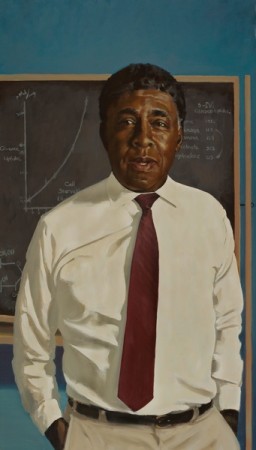
Harold Amos

From Wikipedia, the free encyclopedia
Harold Amos (September 7, 1918 – February 26, 2002[1]) was an American microbiologist and professor. He taught at Harvard Medical School for nearly fifty years and was the first African-American department chair of the school. He also inspired hundreds of minorities to become medical doctors.[2]
Amos was born in PennsaukenNew Jersey. He graduated from Springfield College with a baccalaureate. After serving in the Quartermaster's Corps in World War II, he graduated with a PhD from Harvard Medical School in 1952. Upon completing a Fulbright Scholarship, Amos joined the Harvard Medical School faculty in 1954. He was the chairman of the bacteriology department from 1968 to 1971 and again from 1975 to 1978. In 1975, he was named the Maude and Lillian Presley professor of microbiology and molecular genetics.[3] He was a presidential advisor to Richard Nixon,[2] a Fellow of the American Academy of Arts and Sciences (1974),[4] the Institute of Medicine and the American Association for the Advancement of Science. Amos was awarded the National Academy of SciencesPublic Welfare Medal in 1995[5] and the Harvard Centennial Medal in 2000. He directed the Minority Medical Faculty Development Program of the Robert Wood Johnson Foundation.[6] A diversity award at Harvard Medical School is named after Amos.[7]

*****************************************************************************************************************************
http://innov8tiv.com/black-history-month-harold-amos-first-african-american-microbiologist/

Black History Month: Harold Amos – The First African-American Microbiologist
Harold AmosHarold Amos was not only the first African-American to qualify as a Microbiologist, he was also a renowned scientist, an educator, a mentor and active Francophile. He was born in Pennsauken, New Jersey to Mr. Howard R. Amos Sr. and Mrs. Lola Johnson. His father was employed by the Philadelphia post office, and his mother was employed by a renowned Philadelphia Quaker family.
Harold attended a segregated school in his home Pennsauken, and graduated top of his class. From which he attended the Camden High School found in New Jersey where he graduated in 1936 to join Springfield College in Springfield, Massachusetts. He graduated from Springfield College with Summa Cum Laude (with the highest honors) in 1941 having majored in Biology and a minor in Chemistry. He then took a position of a graduate assistant at the institution’s Biology Department. He left this position and joined the US Army in 1942 as a warrant officer in the battalion which supplied gasoline to the troops. This lead to him serving in England for 2 years and got into France some 6 days after the Normandy’s invasion. He was later on discharged from the army in 1946, but his experience left a lifelong love for France in Harold (probably what lead to him being an avid Francophile).His mother, Mrs. Lola was adopted by the Quaker family since her childhood years, the family took her in and gave her a home as well as home schooling her together with their own children. When she got married to Mr. Howard, the Quaker family maintained close ties with Mrs. Lola and they supplied her family with various reading materials. At one time, the Quaker gave Mrs. Lola’s family a certain book that was the biography of Louis Pasteur and Harold became fascinated when he read it. This was the trigger that initiated the interest in microbiology by Harold Amos. Specifically Harold was intrigued by how Pasteur used goats as experimental animals,  in addition to his natural dislike for his family goats that made Harold all the more interested in Microbiology.
He returned to the US on the fall of 1946, and soon afterwards enrolled for a Biological Sciences’ graduate program at the Division of Medical Sciences at the Harvard Medical School. He graduated with his M.A in 1947 and pursued a PhD shortly afterwards and earned it in 1952, thereby becoming the first African-American ever to get a doctoral degree from this Division. Harold became a graduate student to Mr. Howard J. Mueller, who served as the chairman of the then called Department of Bacteriology and Immunology, but currently known as Microbiology and Molecular Genetics. Mr. Muller made ground breaking achievements by the discovery of methionine by studying the bacterial nutrition back in the days of breadth. Considering that Harold’s thesis was on virology on the agents that are affecting the Herpes virus infectivity by using plaquing found on the chick chorio-allantoic membrane. This earned Harold a Fulbright Fellowship which took him back to France to the Pasteur Institute. At the institute he worked on threonine mutants of Escherichia coli in the Georges Cohen laboratory facilities.
At the time Harold was at the Georges Cohen laboratory, it was the time the facility was considered the Mecca for American scientists. When he returned to Harvard Medical School as a member of the faculty, he wrote a paper on the E. coli and its phages with his most notable one being the one he wrote in 1958 of finding of the 5-methylcytosine in the E. coli RNA, which was decade ahead of its time, (it was only later confirmed decades afterwards). Shortly after his work on the E. coli, he focused back on animal cells which was not in line with employing viruses as the probe of higher cells function, but rather the focus was directly on the cells. For a period of more than 30 years, he spearheaded an unusual wide array of studies: such as use of bacterial RNA to program the synthesis of higher cell  proteins, insulin, ribosome, enzyme inductions, serum, phosphoproteins, RNA metabolism and perhaps notable one on thread on glucose starvation, transport and hexose metabolism. All this knowledge and interest in Microbiology led to Harold getting national level recognition and participation on issued dealing with bio-medical research and education.
He retired from Harvard Medical School after making numerous high profiled achievements and receiving equally high profiled awards. But soon joined the Minority Medical Faculty Development Program (MMFDP) sponsored by the Robert Wood Johnson Foundation as its first National Director where he served till 1994. This program was renamed to Harold Amos Medical Faculty Development Program in 2004, after his death from a stroke on the 26th February 2002.

List of African-American inventors and scientists


From Wikipedia, the free encyclopedia
This list of African-American inventors and scientists documents many of the African Americans who have invented a multitude of items or made discoveries in the course of their lives. These have ranged from practical everyday devices to applications and scientific discoveries in diverse fields, including physics, biology, mathematics, plus the medical, nuclear and space sciences.
Among the earliest was George Washington Carver, whose reputation was based on his research into and promotion of alternative crops to cotton, which aided in nutrition for farm families. He wanted poor farmers to grow alternative crops both as a source of their own food and as a source of other products to improve their way of life. The most popular of his 44 practical bulletins for farmers contained 105 food recipes using peanuts.[1] He also developed and promoted about 100 products made from peanuts that were useful for the house and farm.[citation needed] He received numerous honors for his work, including the Spingarn Medal of theNAACP.
A later renowned scientist was Percy Lavon Julian a research chemist and a pioneer in the chemical synthesis of medicinal drugs from plants. He was the first to synthesize the natural product physostigmine, and a pioneer in the industrial large-scale chemical synthesis of the human hormones, steroidsprogesterone, and testosterone, from plant sterols such as stigmasterol and sitosterol. His work would lay the foundation for the steroid drug industry's production of cortisone, other corticosteroids, and birth control pills.
A contemporary example of a modern day inventor is Lonnie George Johnson, an engineer. Johnson invented the Super Soaker water gun, which was the top-selling toy in the United States in 1991 and 1992. In 1980 Johnson formed his own law firm and licensed the Super Soaker water gun to Larami Corporation. Two years later the Super Soaker generated over $200 million in retail sales and became the best selling toy in America. Larami Corporation was eventually purchased by Hasbro, the second largest toy manufacturer in the world. Over the years, Super Soaker sales have totaled close to one billion dollars. Johnson reinvested a majority of his earnings from the Super Soaker into research and development for his energy technology companies – "It's who I am, it's what I do."[2] Currently, Johnson holds over 80 patents, with over 20 more pending, and is the author of several publications on spacecraft power systems.[3][4]

Inventors and scientists[edit]

Note: this table is viewable as a timeline when clicking on the sort symbol next to 'Life'.
NameLifeOccupationInventions/AccomplishmentsRefs
Amos, Harold1918–2003MicrobiologistFirst African-American department chair at Harvard Medical School[5]
Alcorn, George Edward, Jr.1940–Physicist
Inventor
Invented a method of fabricating an imaging X-ray spectrometer[6][7]
Andrews, James J.1930–1998MathematicianPut forth the Andrews–Curtis conjecture in group theory with Morton L. Curtis, still unsolved[8]
Leonard C. Bailey1890–1976InventorFolding bed[9]
Ball, Alice Augusta1892–1916ChemistExtracted chaulmoogra oil for the treatment of Hansen's disease (leprosy).[10]
Banneker, Benjamin1731–1806Mathematician
Astronomer
Surveyor
Clockmaker
Author
Farmer
Wooden clock (1753). Assisted in survey of the original boundaries of the District of Columbia (1791). Authored almanac and ephemeris (1792–1797)[11]
Banyaga, Augustin1947–MathematicianWork on diffeomorphisms and symplectomorphisms[12]
Bashen, Janet1957–Inventor
Entrepreneur
Professional
Consultant
First African-American woman to receive a patent for a web-based software invention. The invention, LinkLine, is an Equal Employment Opportunity case management and tracking software.[13]
Bath, Patricia1942–OphthalmologistFirst African-American female physician to receive a patent for a medical invention. Inventions relate tocataract surgery and include the Laserphaco Probe, which revolutionized the industry in the 1980s, and an ultrasound technique for treatment.[14][15][16]
Beard, Andrew1849–1921Farmer
Carpenter
Blacksmith
Railroad worker
Businessman
Inventor
Janney coupler improvements

Invented the car device#594,059 dated November 23, 1897
Rotary engine patent #478,271 dated July 5, 1892
[17]
Bell, Earl S.1977–Inventor
Entrepreneur
Architect
Industrial Designer
Invented Chair With Sliding Skin (2004), and the Quantitative Display Apparatus (2005)[18]
Benjamin, Miriam1861–1947Inventor
Educator
Invented "Gong and Signal Chair for Hotels". Second African-American woman to receive a patent.[21]
Berry, Leonidas1902–1995GastroenterologistGastroscope pioneer[22]
Bharucha-Reid, Albert T.1927–1985Mathematician
Statistician
Probability theory and Markov chain theorist[23]
Black, Keith1957–NeurosurgeonBrain tumor surgery and research[24][25]
Blackwell, David1919–2010Mathematician
Statistician
First proposed the Blackwell channel model used in coding theory and information theory; one of theeponyms of the Rao–Blackwell theorem, which is a process that significantly improves crude statisticalestimators.[26]
Blair, Henry1807–1860InventorSecond black inventor to issue a patent
Invented early spark plug
[27]
Boahen, Kwabena19xx–BioengineerSilicon retina able to process images in the same manner as a living retina[29][30]
Boone, Sarah1832–1905InventorIroning board allowing sleeves of women's garments to be ironed more easily[31][32][33]
Bouchet, Edward1852–1918PhysicistFirst African-American to receive a Ph.D. in any subject. Received physics doctorate from Yale University in 1876.
Bowman, James1923–2011PhysicianPathologist and geneticist; Professor Emeritus Pritzker School of Medicine; first tenured African-American professor at the University of Chicago Division of Biological Sciences.[34][35]
Boykin, Otis1920–1982Inventor
Engineer
Artificial heart pacemaker control unit.[36][37][38]
Brady, St. Elmo1884–1966ChemistPublished three scholarly abstracts in Science and also collaborated on a paper published in Journal of Industrial and Engineering Chemistry.[39]
Branson, Herman1914–1995Physicist
Educator
Protein structure research[40][41]
Brooks, Charles1865– ?Inventor[citation needed]Street sweeper truck and a type of paper punch[citation needed]
Brooks, Phil19xx–Inventor[citation needed]First U.S. Patent for a disposable syringe[citation needed]
Henry Brown1832– ?InventorInvented fire safe[42]
Brown, Oscar E.18xx– ?InventorReceived a patent for an improved horseshoe [43]
Burr, John Albert18xx– ?InventorRotary-blade lawn mower patent[44]
Cardozo, P. William1905–1962PediatricianSickle cell anemia studies. In October 1937, he published "Immunologic Studies in Sickle Cell Anemia" in theArchives of Internal Medicine; many of the findings are still valid today.
Carson, Ben1951–Pediatric NeurosurgeonPediatric Neurosurgery at Johns Hopkins University
First surgeon to successfully separate craniopagus twins
[45]
Carver, George Washington1865–1943Botanical researcherDiscovered hundreds of uses for previously useless vegetables and fruits, principally the peanut[46][47][48][49]
Charles W. Chappelle1872-1941electrician, construction, international businessman, and aviation pioneerDesigned long distance flight airplane. C.W. Chappelle was the only African-American to invent and display the airplane at the 1911 First Industrial Air Show held in conjunction with the Auto Show at Grand Central Palace in Manhattan in New York City. C.W. Chappelle was also the president of the African Union Company, Inc.,[50][51][52]
Chappelle, Emmett1925–Scientist andresearcherValuable contributions to several fields: medicinebiologyfood science, and astrochemistry
Clark, Mamie1914–2005PsychologistConducted 1940s experiments using dolls to study children's attitudes about race.
Clark, Kenneth1917–1983PsychologistFirst Black president of the American Psychological Association[53]
Crosthwait, David, Jr.1898–1976Research engineerHeatingventilation, and air conditioning.
Received some 40 U.S. patents relating to HVAC systems.
Dabiri, John1980-BiophysicistExpert on jellyfish hydrodynamics and designer of a vertical-axis wind farm adapted from schooling fish.
Daly, Marie Maynard1921–2003ChemistFirst black American woman with a Ph.D. in chemistry.
Dean, Mark1957–Computer scientistLed the team that developed the ISA bus, and led the design team responsible for creating the first one-gigahertz computer processor chip.[54][55][56]
Drew, Charles1904–1950Medical researcherDeveloped improved techniques for blood storage
Du Chaillu, Paul1831–1903Zoologist
Explorer
Anthropologist
Explorer who was the first modern European outsider to confirm the existence of gorillas, and later thePygmy people of central Africa. Identified as white throughout life, but his mother was a Réunionnais mulatto. Settled in America and considered it his country by adoption. The full aspects of his ancestry were not uncovered until 1979, and are still little known today.
Easley, Annie1933–2011[57]Computer scientistWork at the Lewis Research Center of the National Aeronautics and Space Administration and its predecessor, the National Advisory Committee for Aeronautics[58][59]
Ellis, Clarence "Skip"1943–Computer scientistFirst African American with a Ph.D. in Computer Science
Software inventor including OfficeTalk at Xerox PARC
[60][61]
Ezerioha, Bisi1972–Automotive engineerDrag racing engineer and driver
Ferguson, Lloyd Noel1918–2011Chemist
Educator
Chemistry doctorate, first received (1943, University of California, Berkeley)[62][63][64]
Fryer, Roland G., Jr.1977–Economist
Social scientist
Statistician
Inequality studies
Gates, Sylvester James1950–Theoretical physicistWork on supersymmetrysupergravity, and superstring theory[65][66]
Goode, Sarah E.1855–1905InventorCabinet bed invention
First African-American woman to receive a patent in the United States
[67][68]
Gilbert, Juan E.1969–Computer scientistAwarded the first Presidential Endowed Chair at Clemson University in honor of his accomplishments
Graves, Joseph L.1955–Evolutionary biologist[69][70][71]
Greenaugh, Kevin1956–Nuclear engineer[72]
Griffin, Bessie Blount1914–2009Physical therapist
Inventor
Amputee self-feeding device[73][74]
Hall, Lloyd1894–1971Chemist
Harris, James A.1932–2000Co-discovered Rutherfordium (element 104) and Hafnium (element 105) at Lawrence Livermore Laboratory[75]
Hawkins, Walter Lincoln1911–1992ScientistInventor at Bell Laboratories[76]
Hodge, John E.1914–1996Chemist
Holley, Kerrie1954–Research computer scientist at IBMCo-creator of Service-Oriented Modeling and Architecture, SOMA and the Service Integration Maturity Model(SIMM)
Jarvis, Erich19xx–NeurobiologistDuke University neuroscience bird songs studies.[77][78][79]
Johnson, Isaac18xx– ?InventorHeld patent for improvements to the bicycle frame, specifically so it could be taken apart for compact storage.[80]
Johnson, Lonnie1949–Mechanical engineerNuclear engineer
Inventor
Invented Super Soaker while researching thermal energy transfer engines; worked with NASA. Holder of over 80 patents[4][81]
[82][83]
Jones, Frederick McKinley1893–1961InventorInvented refrigerated truck systems[84]
Julian, Percy1899–1975ChemistFirst to synthesize the natural product physostigmine; earned 130 chemical patents; lauded for humanitarian achievements.[85][86][87][88]
Just, Ernest1883–1941Woods Hole Marine Biology InstituteBiologistProvided basic and initial descriptions of the structure–function–property relationship of the plasma membrane of biological cells.[89][90][91]
Kittles, Rick1967–GeneticistWork in tracing the ancestry of African Americans via DNA testing[92][93]
Kountz, Samuel L.1930–1981Transplant surgeon
Researcher
Organ transplantation pioneer, particularly renal transplant research and surgery.
Author or co-author of 172 articles in scientific publications.
[94][95][96][97]
Latimer, Lewis1848–1928Inventor
Draftsman
Expert witness
Worked as a draftsman for both Alexander Graham Bell and Thomas Edison. He became a member of Edison's Pioneers and served as an expert witness in many light bulb litigation lawsuits. Invention of the Water closet is also said to be invented by Lewis.[98][99][100][101]
Lawson, Jerry1940–2011Computer engineerDesigner of Fairchild Channel F, the first programmable ROM cartridge-based video game console[6][102]
Lee, Raphael Carl1949–Surgeon
Biomedical engineer[citation needed]
Paul and Aileen Russell Professor, Pritzker School of Medicine; MacArthur Fellow, Searle Scholar, Founder and Chairman, Avocet Polymer Technologies, Inc.; Founder and Chairman, Renacyte BioMolecular Technologies, Inc; Discovered use of surfactant copolymers as molecular chaperones to augment endogenous injury repair mechanisms of living cells. Holder of many patents covering scar treatment therapies, tissue engineered ligaments, brain trauma therapies, protective garments.[citation needed]http://www.blackinventions101.com/blackinventors.html
Lynk, Beebe Steven1872–1948ChemistTeacher at West Tennessee University
Mahoney, Mary1845-1926NurseFirst African American to study and work as a professionally trained nurse in the United States [103]
Matzeliger, Jan1852–1889InventorShoe assembly Machine[104][105]
McBay, Henry1914–1995ChemistHis discoveries allowed chemists around the world to create inexpensive peroxide compounds[106][107]
McCoy, Elijah1844–1929InventorInvented a version of the automatic lubricator for steam engines,McCoy learned a great deal of his skills from a mechanical apprenticeship when he was age fifteen .[108][109]
McLurkin, James1972–Roboticist[110]
McWhorter, John1965–LinguistSpecializes in the study of creole language formation
Montgomery, Benjamin1819–1877InventorDesigned a steam operated propeller to provide propulsion to boats in shallow water
Moore, Willie Hobbs1934-1994PhysicistWillie Hobbs Moore was the first African American woman to earn a Ph.D. in Physics (University of Michigan Ann Arbor 1972) on vibrational analysis of secondary chlorides.[111]
Mensah, Thomas1950--Inventor
Nmezi, Murphy1955–Physician/BiostatisticianAdvances in Path Analysis and Structural Equation Modeling
Nriagu, Jerome1944–GeochemistStudies toxic metals in the environment. Originator of the lead poisoning thesis of the decline of the Roman Empire
Ogbu, John Uzo1939–2003AnthropologistEthnic studies in education and economics[112][113]
Olukotun, Kunle19xx–Computer scientistEarly advocate and researcher of multi-core processors
Oyekan, Soni1946–Chemical engineerInventions in oil refining
Poindexter, Hildrus1901–1987Bacteriologist
Epidemiologist
Work on the epidemiology of tropical diseases including malaria
Petters, Arlie1964–PhysicistWork on the mathematical physics of gravitational lensing
Quarterman, Lloyd Albert1918–1982Scientist
Fluoride Chemist
Manhattan Project, worked with Albert Einstein and Enrico Fermi
Renfroe, Earl1907–2000Orthodontist[114][115]
Rillieux, Norbert1806–1894Engineer
Inventor
Inventor of the multiple-effect evaporator[116]
Robinson, Larry1957–Environmental chemistInvestigated possible role of arsenic in the death of Zachary Taylor. Interim president of Florida A&M University.
Russell, Jesse1948–Engineer
Inventor
Wireless communications engineer
Sammons, Walter1890–1973InventorPatent for hot comb[117]
Sowell, Thomas1930–Economist
Social scientist
Economist, social theorist and political philosopher[118][119][120][121]
Steele, Claude1946–Psychologist
Social scientist
Stereotype threat studies
Stiff, Lee1941–MathematicianPresident of the National Council of Teachers of Mathematics from 2000 to 2002[122]
Snyder, Window1976–Computer engineerSecurity engineer at MicrosoftMozilla, and Apple
Temple, Lewis1800–1854InventorBlacksmith,abolitionistInventor of the toggling whaling harpoon head.[123]
Thomas, Vivien1910–1985Surgical technicianBlue baby syndrome treatment in the 1940s[124][125][126]
Turner, Charles Henry1867–1923ZoologistFirst person to prove that insects can hear and can distinguish pitch, that cockroaches can learn by trial and error, and that honeybees can see color. First African-American to receive a Ph.D. from the University of Chicago.[127]
Tyree, Bernadette19xx–Biochemist[citation needed]Program Director at National Institute of Arthritis and Musculoskeletal and Skin Diseases[citation needed]
Tyson, Neil deGrasse1958–AstronomerResearcher and popular educator in astronomy and the sciences[128][129][130]
Walker, Arthur B. C., Jr.1936–2001AstronomerDeveloped normal incidence multilayer XUV telescopes to photograph the solar corona[131][132][133]
Walker, C. J.1867–1919Inventor[citation needed]Created black cosmetic products.
Washington, Warren M.1936–Atmospheric scientistFormer chair of the National Science Board[134][135][136][137]
West, James E.1931–Acoustician
Inventor
Co-developed the foil electret microphone[138][139][140]
Wilkins, J. Ernest, Jr.1923–2011Mathematician
Engineer
Nuclear scientist
Entered University of Chicago at age 13, PhD at 19, worked on the Manhattan Project, wrote over 100 scientific papers, helped recruit minorities into the sciences.[141][142]
[143]
Williams, Daniel1856–1931SurgeonPerformed the first successful open-heart surgery in the United States[144]
Williams, Scott W.1943–Mathematician
Williams, Walter E.1936–Economist
Social scientist
[145][146][147]
Woods, Granville1856–1910InventorInvented the Synchronous Multiplex Railway Telegraph[148]
Wright, Jane C.1919–2013Cancer Research and SurgeonNoted for her contributions to chemotherapy and for pioneering the use of the drug methotrexate to treat breast cancer and skin cancer
Wright, Louis T.1891–1952SurgeonLed team that first used Aureomycin as a treatment on humans[149][150][151]
Young, Roger Arliner1899–1964ZoologistFirst African-American woman to receive a doctorate degree in zoology[152][153]